
Why Did Intake Breathing Secure a $62M Investment?
- Von Kylie
- Update 2026/11/21
1250 words, 5-6 minutes read time
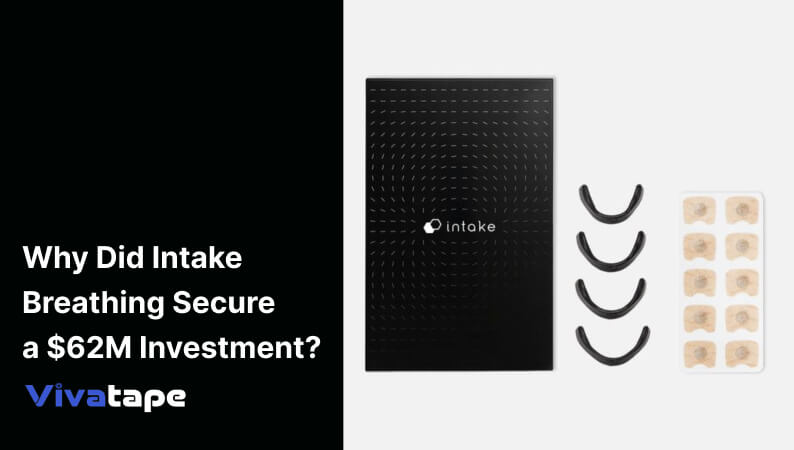
Why would investors put $62 million into a product that helps people breathe through their noses?
For Intake Breathing, the answer goes beyond its magnetic nasal dilator. The company has demonstrated strong sales growth, attracted consumers who previously didn’t buy nasal strips, and built a product model that encourages repeat purchases.
In October 2026, Camino Partners invested $62 million in Intake Breathing, betting on its potential to bring nasal breathing products into everyday wellness routines.
Here’s what made the company attractive to investors—and what other nasal strip brands can learn from its success.
What Is Intake Breathing's $62M Investment About?
On October 28, 2026, Intake Breathing announced a $62 million investment from Camino Partners, an investment firm founded by KIND Snacks creator and Shark Tank investor Daniel Lubetzky.
The funding will support Intake’s expansion from online sales into physical retail stores, along with improvements to its operations and marketing.
According to Modern Retail, several figures help explain the investment:
100 million+ pairs of adhesive breathing tabs sold since 2023, according to Intake.
Triple-digit growth reported by the company over the previous three years.
74% of customers had not previously purchased traditional nasal strip products, according to Camino Partners.
For a product category traditionally associated with congestion relief, these numbers caught investors’ attention.
Why Did Investors Choose Intake Breathing?

The investment wasn’t simply a bet on a growing wellness trend. Several factors made Intake particularly interesting.
Strong sales and repeat purchases
Intake already had an established online business before receiving its first institutional investment.
Its products are sold through its website and Amazon, and customers can purchase replacement adhesive tabs after buying the starter kit.
In an interview with Entrepreneur, Daniel Lubetzky highlighted the company’s customer response and repeat purchasing behavior as important reasons for his confidence.
For investors, a product that customers continue buying can be more attractive than one that generates only a short-lived trend.
A different approach to nasal strips

Traditional nasal strips use flexible supports and adhesive backing to lift the nasal sidewalls.
Intake offers a magnetic nasal dilator system with a reusable external band and disposable adhesive tabs.
Both designs aim to improve nasal airflow, but their construction and user experience differ.
Intake’s reusable-and-refillable design also creates an opportunity for recurring sales.
For a more detailed product comparison, see our guide: Nasal Dilator vs. Nasal Strip: What’s the Difference?
Reaching customers beyond the traditional market
Perhaps the most interesting finding is that 74% of Intake customers had never purchased traditional nasal strips before.
That suggests the company isn’t just taking customers away from established brands. It’s attracting people who previously had little interest in the category.
Camino Partners president Elle Lanning told Modern Retail that this finding helped convince the firm to invest.
The opportunity is clear: nasal breathing products may have a much wider audience than traditional congestion-relief customers.
Room for retail expansion
Intake has built much of its business online. Its next step is bringing the product to physical stores.
Camino Partners has experience growing consumer brands, making it a potentially valuable partner as Intake expands its retail distribution.
What Can Nasal Strip Brands Learn From Intake?
Intake’s success doesn’t mean every nasal strip business will attract major investment. But it offers three practical lessons.
1. Create a product that stands out.
Different materials, adhesives, support structures, colors, and magnetic designs can help brands develop products for specific customers.
2. Know your target audience.
A sports-focused nasal strip and a sleep-focused nasal strip may require different designs, packaging, and marketing messages.
3. Think about repeat purchases.
Convenient packaging, refill options, and a good customer experience can encourage customers to return.
For emerging brands, the goal isn’t to copy Intake. It’s to identify what customers need and develop a product that meets those expectations.
Unter VivaTape, we help businesses develop private label nasal strips and magnetic nasal breathing products through OEM/ODM manufacturing, including customized materials, adhesives, designs, and packaging.
Explore our Magnetic Nasal Strip Manufacturing Solutions to learn more.
Final Thoughts
Intake Breathing’s $62 million investment shows that even a familiar product can attract major attention when a brand combines distinctive design, strong customer demand, and a clear growth strategy.
For nasal strip brands, the real opportunity is not just selling another breathing product—it’s creating one that customers want to use again and again.
FAQ
1. Is There Still Room for New Brands in the Nasal Strip Market?
Yes, there may be opportunities for new brands, especially those targeting specific audiences such as athletes, sleep-focused consumers, or wellness enthusiasts.
Intake’s growth suggests that nasal breathing products can attract customers beyond the traditional congestion-relief market. However, success still depends on product quality, differentiation, pricing, and effective branding.
2. Will Magnetic Nasal Dilators Replace Traditional Nasal Strips?
Not necessarily. Both products aim to improve nasal airflow, but they offer different experiences.
Traditional nasal strips are simple, disposable, and easy to apply. Magnetic nasal dilators typically combine a reusable band with adhesive refills.
Each design may appeal to different customer preferences, and magnetic systems are not automatically more effective.
3. How Can a New Nasal Strip Brand Stand Out?
Start by identifying a specific target audience and understanding what matters most to them.
For example, sports-focused customers may prioritize adhesion during workouts, while sleep-focused consumers may prefer comfortable materials and gentle removal.
Product design, packaging, and a clear brand identity can all help create a more distinctive offering.
4. What Should Brands Consider Before Launching Magnetic Nasal Dilators?
Brands should evaluate product design, adhesive performance, skin compatibility, comfort, and manufacturing consistency.
It’s also important to review applicable regulatory requirements, product testing, and existing patents before developing a magnetic nasal dilator.
Working with an experienced OEM/ODM manufacturer can help brands assess suitable materials, customization options, and production requirements.
Modern Retail — Intake Breathing Nabs $62M Investment — October 28, 2026.
Entrepreneur — KIND Snacks Founder Invests $62 Million in a Nasal Strip Company — October 28, 2026.
Glossy — Can Intake Turn Optimized Breathing Into a Wellness Status Symbol? — October 28, 2026.
Inhaltsübersicht
Warum Vivatape wählen
- 10 Jahre Erfahrung in der Fertigung
- Flexible maßgeschneiderte Lösungen
- Wir betreuen Kunden in über 30 Ländern