
How to Source Nasal Strips from China in 2026
Why This Viral Sleep Routine Is Taking Over TikTok
- بقلم كايلي
- Update 2026/4/7
2,500 words, 8-10 minutes read time
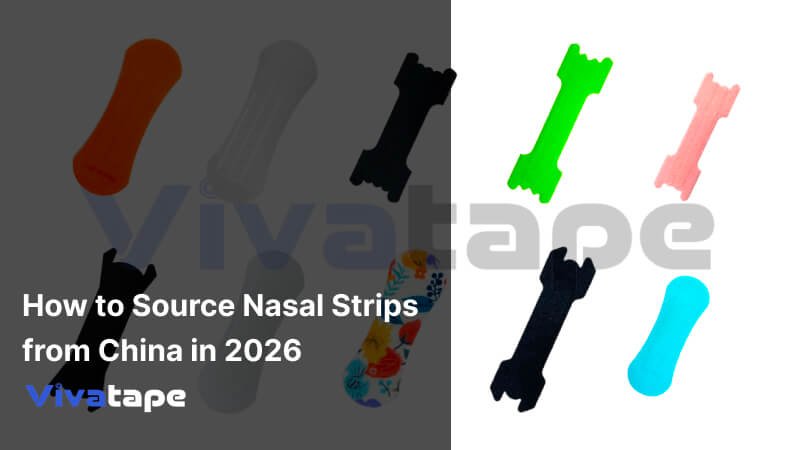
Sourcing nasal strips from China in 2026 is no longer just about finding a low-cost factory. For brand owners, importers, wholesalers, and Amazon sellers, the real challenge is choosing the right product structure, material, adhesive, packaging format, and supplier support model before placing an order.
A reliable nasal strip supplier should do more than offer a quotation. They should help you compare product options, arrange samples, support private label packaging, and make the sourcing process more efficient from development to production.
In this guide, we explain how to source nasal strips from China step by step, including how to compare materials, choose between standard and custom options, evaluate suppliers, understand MOQ and pricing, and avoid common sourcing mistakes.
How to source nasal strips from China in 2026
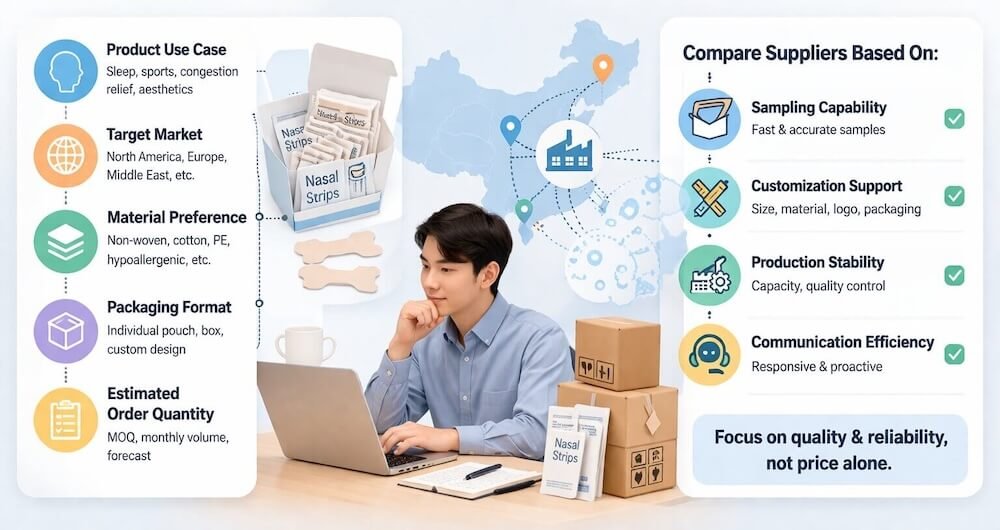
To source nasal strips from China in 2026, buyers should first define the product use case, target market, material preference, packaging format, and estimated order quantity. Then they should compare suppliers based on sampling capability, customization support, production stability, and communication efficiency rather than price alone.
Why More Buyers Source Nasal Strips from China
China remains one of the most important sourcing destinations for adhesive wellness products, including nasal strips. For many buyers, the biggest advantage is not just manufacturing cost. It is the combination of production flexibility, scalable capacity, packaging support, and private label options.
Many Chinese suppliers can support different project types, from standard wholesale products to more customized OEM and private label developments. This is especially useful for buyers who want to test a market first and then move into a more customized product line later.
For many businesses, sourcing from China offers practical advantages such as:
Multiple material options
Flexible packaging formats

OEM and private label support

Scalable production capacity
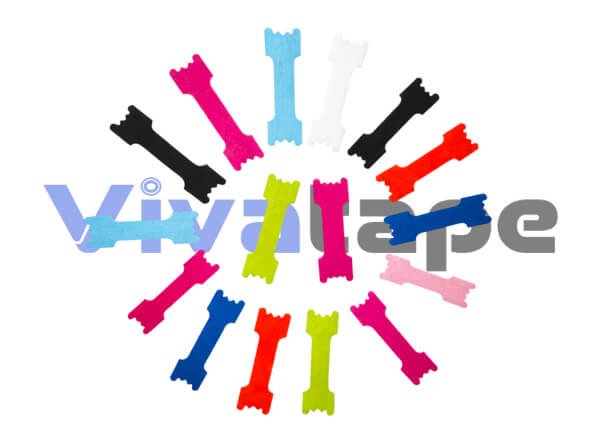
More efficient development for custom projects
In 2026, buyers are also placing more value on product comfort, packaging quality, and brand presentation. That means the right supplier should help align the nasal strip with the intended sales channel and target user, not simply manufacture a basic product.
What Are Nasal Strips?
Nasal strips are external adhesive strips applied across the nose to help lift the nasal passages and improve airflow. They are commonly used for sleep support, sports breathing, and everyday breathing comfort.
At first glance, they may appear to be a simple product. In actual sourcing projects, however, nasal strips can differ significantly in fabric, adhesive, support strength, shape, size, and packaging. These details affect not only the product’s performance, but also its market positioning and customer experience.
For example, a nasal strip designed for nightly sleep use may focus more on comfort and gentle removal, while a strip developed for sports may need stronger support and more secure adhesion.
That is why buyers should define the intended use before comparing quotations.
Who Usually Buys Nasal Strips from China?
Nasal strips are commonly sourced by:
- private label brand owners
- importers and distributors
- pharmacies and retail chains
- Amazon and e-commerce sellers
- sports and recovery brands
- sleep and wellness brands
Some buyers want a standard product with custom packaging so they can launch faster. Others need a fully customized strip with specific material, shape, size, adhesive, or brand presentation.
The right sourcing model depends on the buyer’s business stage, sales channel, market goals, and expected volume.
What Should Buyers Check Before Sourcing Nasal Strips from China?
Before sourcing nasal strips from China, buyers should confirm the target market, product use scenario, material preference, adhesive level, packaging format, estimated quantity, and whether the project is standard, private label, or fully customized. These details affect MOQ, pricing, sampling, and supplier recommendations.
Here are the most important points to confirm early.
Target market
Target marketWhere will the product be sold? Different markets may have different expectations for packaging, labeling, and compliance support.
Product use scenario
Will the nasal strip be sold for sleep, sports, daily breathing support, or a more premium niche concept? Different use cases often require different materials and adhesive performance.
Target user
Is the product for general consumers, athletes, wellness buyers, or a more specialized audience? This affects product positioning and packaging direction.
Standard product or custom project
Some buyers only need custom packaging for a standard nasal strip. Others want to customize the strip itself. This makes a big difference in MOQ, development time, and cost structure.
Packaging format
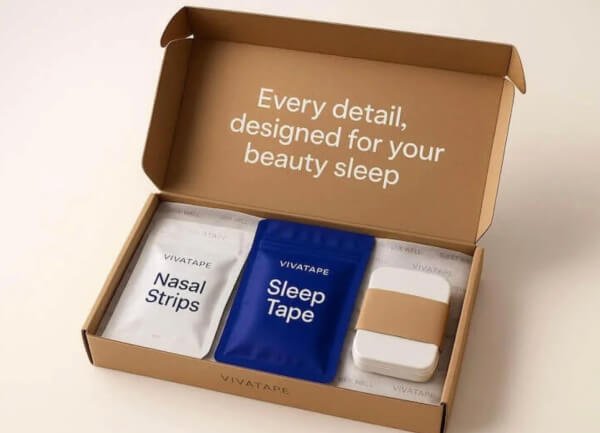
Will the product be sold in foil pouches, paper boxes, refill packs, or premium kits? Packaging should be considered early, not added at the end.
Estimated quantity
Order quantity directly influences pricing, printing options, and feasible customization levels.
Sampling expectations
Will standard samples be enough for evaluation, or is a revised sample or pre-production confirmation sample needed before mass production?
Common Types of Nasal Strips
Not all nasal strips are built for the same use case. Buyers usually come across several common categories when sourcing.
Sleep nasal strips
These are usually designed for overnight wear. Buyers in this category often focus on softness, skin comfort, gentle adhesion, and ease of removal.
Sports nasal strips
Sports versions are often developed with stronger support and more secure adhesion. They are generally more performance-driven and may need to hold up better during activity or sweating.
Everyday nasal strips
These products are usually positioned as all-purpose breathing support strips. They often aim for a balance between comfort, function, and affordability.
Magnetic nasal strips
Some suppliers also offer magnetic nasal strip concepts or related breathing support systems. These products are often positioned more differently in the market and may require more premium packaging and presentation.
Quick Comparison of Common Nasal Strip Options
| Type | Best For | Key Focus |
|---|---|---|
| Sleep Nasal Strips | Nightly use | Comfort and gentle removal |
| Sports Nasal Strips | Exercise and active use | Stronger support and secure adhesion |
| شرائط الأنف المغناطيسية | Premium product lines | Differentiation and packaging experience |
Main Material Options for Nasal Strips
Material choice is one of the most important parts of the sourcing process. It affects product feel, appearance, adhesion behavior, and brand positioning.
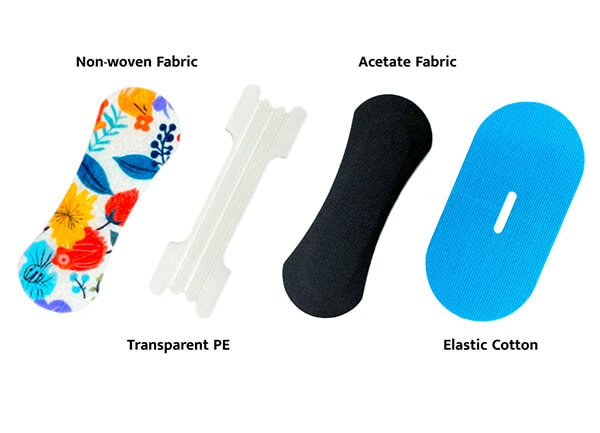
Non-woven material
Non-woven fabric is widely used in nasal strip production. It is often chosen for its softness, practicality, and cost efficiency. It works well for many standard projects and is suitable for a wide range of market positions.
Acetate fabric
Acetate fabric often offers a smoother and more refined appearance. It can create a more premium look and may be preferred for projects where finish quality and visual presentation matter more.
بولي إيثيلين شفاف
Transparent PE can create a lighter and more discreet look. It may suit brands that want a less visible product or a cleaner, more modern presentation.
Adhesive options
Adhesive choice matters just as much as the fabric. Different projects may require:
- gentler adhesion for comfort-focused products
- stronger adhesion for sports or demanding use conditions
Standard, Private Label, or Fully Customized?
Many buyers ask for custom nasal strips, but customization can mean very different things depending on the project.
Standard product with custom packaging
This is often the easiest way to start. The strip itself stays close to the supplier’s existing version, while the outer packaging is customized with your logo, branding, and label details.
This model is often suitable for:
- new brands testing the market
- Amazon sellers
- buyers who want a lower-MOQ starting point
- projects with faster launch timelines
Private label nasal strips
In a private label project, the buyer uses the supplier’s standard or semi-standard product structure but sells it under their own brand. The packaging, logo, and brand presentation are customized for the buyer.
This is a common option for businesses that want a branded product without fully developing a new strip structure.
Fully customized nasal strips
For larger or more established projects, buyers may want to customize:
- strip size
- shape
- color
- material
- adhesive level
- support structure
- packaging format
This option usually requires more discussion, higher MOQs, and a more structured sampling process.
How to Evaluate a Nasal Strip Supplier
Choosing a supplier should not be based on price alone. A reliable supplier should be able to support the project from early sampling through mass production.
Here are some areas buyers should evaluate carefully.
Product knowledge
Can the supplier clearly explain the differences between materials, adhesive options, support strength, and packaging formats? A supplier who only sends a low quotation without explaining the product is often difficult to work with later.
Sampling capability
Can they send standard samples quickly? Can they revise the product after feedback? Can they explain the difference between a general sample and a pre-production confirmation sample?
A strong supplier should have a clear and practical sampling process.
Packaging support
If you are building a brand, packaging is a major part of the project. A good supplier should be able to support custom printed packaging and recommend a packaging structure based on your sales channel.
Production stability
You should understand whether the supplier has stable production capability, realistic lead times, and a workable quality control process.
Communication efficiency
Clear communication saves time and reduces risk. Organized quotations, fast follow-up, and direct answers are often a sign of a more reliable long-term partner.
Questions to Ask Before Requesting a Quote
Many buyers ask for quotations too early, before the project details are defined. This often leads to confusing price comparisons and multiple revisions.
Before requesting a formal quotation, it helps to confirm:
- target market
- use scenario
- preferred material
- desired size or shape
- adhesive preference
- packaging format
- estimated order quantity
- whether the strip itself needs customization
- whether printed packaging is required
- whether samples are needed first
The clearer these details are, the more accurate and useful the quotation will be.
Typical Sampling Process for Nasal Strips
Sampling is one of the most important stages when sourcing nasal strips from China. It allows buyers to test the product before moving into production.
A typical sampling process may look like this.
1. Requirement confirmation
The buyer and supplier confirm the use scenario, target market, strip type, and packaging direction.
2. Product recommendation
The supplier recommends one or more suitable options based on the project goals.
3. Sample preparation
Standard samples or initial customized samples are prepared and sent for review.
4. Testing and feedback
The buyer tests comfort, hold strength, fit, support level, and packaging presentation. Feedback is then shared.
5. Revision if needed
If adjustments are needed, the supplier revises the proposal or prepares another sample.
6. Pre-production confirmation
Before mass production begins, the final product and packaging details should be confirmed clearly.
This process is especially important for private label and custom projects, where even small changes can affect the final result.
What Affects the Price of Nasal Strips?
One of the most common buyer questions is why prices vary from supplier to supplier. In reality, nasal strip pricing depends on much more than the strip alone.
Material choice
Different fabrics and support materials can affect production cost.
Adhesive type
A gentler, stronger, or more specialized adhesive may change the final price.
Size and structure
Larger sizes, special shapes, or more complex structures may cost more than standard versions.
Packaging type
Foil pouches, paper boxes, refill packs, and premium kits all affect the final quotation.
Printing requirements
Logo printing, color printing, and packaging customization may involve setup costs and different MOQ levels.
Order volume
Higher order quantities usually allow better unit pricing.
Shipping terms
Air freight, sea freight, DDP terms, and destination requirements can all influence the total landed cost.
That is why prices should only be compared after the full product and packaging specification is aligned.
Packaging Options for Private Label Nasal Strips
Packaging plays a major role in how nasal strips are sold and perceived. It affects brand image, consumer experience, shipping efficiency, and shelf presentation.
Foil pouch packaging
This is one of the most common formats. It is practical, cost-efficient, and suitable for many private label or retail-ready projects.
Paper box packaging
Paper boxes often create a stronger retail presence and a more structured brand presentation. They can work well for brands that want better shelf visibility.
Refill packs
Refill packs can be useful for repeat-purchase models or for brands that want a more flexible packaging system.
Premium packaging
Premium breathing-support products or specialty lines may require more elevated packaging with better visual impact and stronger unboxing appeal.
When choosing packaging, buyers should consider where the product will be sold. Retail, pharmacy, Amazon, and direct-to-consumer channels often need different packaging strategies.
Compliance and Export Considerations
Regulatory and labeling expectations can vary depending on the destination market. Buyers should confirm local requirements before placing larger orders.
A supplier may be able to support with certain documents, test reports, or quality-system information, but buyers should still verify what is specifically required in their own market.
Points to check early may include:
- labeling requirements
- packaging language
- importer information
- test report expectations
- certification requirements
- shipping documentation
It is usually much easier to clarify these details before production than to deal with them at the shipping stage.
Compliance and Export Considerations
Many sourcing issues happen not because the product is complicated, but because the project details were not aligned clearly at the beginning.
Focusing only on price
The lowest price is not always the best value. If the material, adhesive, support structure, or packaging is not suitable for your market, the product may underperform even if the quotation looks attractive.
Not defining the use scenario clearly
A sleep nasal strip and a sports nasal strip should not always be sourced in the same way. Product positioning should come first.
Comparing quotations without matching specifications
If different suppliers are quoting different materials, sizes, adhesives, or packaging structures, the prices are not truly comparable.
Skipping proper sample testing
A quick visual check is not enough. Buyers should test actual comfort, hold, fit, and removal experience whenever possible.
Overlooking packaging details
Packaging affects both cost and perceived value. It should be discussed early, not added as an afterthought.
Confusing standard samples with pre-production confirmation
A general sample may only show the product direction. It should not always be treated as the final production standard unless both sides have clearly confirmed that.
How to Work More Efficiently with a Nasal Strip Manufacturer in China
If you want a smoother sourcing process, it helps to prepare your inquiry in a structured way.
A helpful supplier inquiry usually includes:
- your target market
- your intended use scenario
- your preferred material if known
- your packaging idea
- your estimated quantity
- whether you want a standard product, private label, or custom development
- whether you need samples first
This helps the supplier recommend more suitable options instead of sending a generic quotation that may not fit your actual project.
Final Thoughts
Sourcing nasal strips from China in 2026 is easier when the project requirements are clear from the beginning. Instead of comparing prices alone, buyers should look at material options, support strength, adhesive performance, packaging structure, MOQ, and supplier communication together.
Whether you are developing a sleep nasal strip, sports nasal strip, or a private label breathing support product, a structured sampling and sourcing process can help reduce mistakes and improve consistency.
If you are looking for a nasal strips manufacturer in China for OEM, private label, or custom packaging projects, it helps to start with samples and a clear product brief before moving into production.
الأسئلة الشائعة
What is the MOQ for private label nasal strips?
MOQ depends on the product type, packaging format, and level of customization. A standard product with custom packaging usually requires a lower MOQ than a fully customized strip.
What materials are commonly used for nasal strips?
Common materials include non-woven fabric, acetate fabric, and transparent PE. Each option offers a different balance of appearance, comfort, and positioning.
Can I customize the packaging for nasal strips?
Yes. Many suppliers support custom packaging such as foil pouches, paper boxes, refill packs, and retail-ready branded packaging.
What is the difference between sleep nasal strips and sports nasal strips?
Sleep nasal strips usually focus more on comfort and gentle wear, while sports nasal strips often require stronger support and more secure adhesion.
How long does the sampling process take?
Timing depends on whether you need standard samples or customized samples. Projects involving packaging development or product changes usually take longer than standard sample requests.
What affects the final price of nasal strips?
The final price depends on material, adhesive, structure, size, packaging, customization level, printing requirements, quantity, and shipping terms.
Need Help Sourcing Nasal Strips for Your Brand?
If you are planning to launch a nasal strip product, test a private label idea, or compare packaging options, it helps to start with clear product requirements and the right supplier discussion.
We support OEM and private label nasal strip projects with sample testing, packaging options, and product suggestions based on your market and sales channel.
جدول المحتويات
Why Choose Vivatape
- 10 Years of Manufacturing Experience
- Flexible Custom Solutions
- Serving Clients in 30+ Countries
 EN
EN  DE
DE  AR
AR  FR
FR  ES
ES  DA
DA  PT
PT  IT
IT  NL
NL  TH
TH  TR
TR  PL
PL  JA
JA